
Slovakia’s National Council has passed the long-awaited amendment to the Slovak Citizenship Act (no. 40/1993 Coll.). Children, grandchildren and great-grandchildren of Czechoslovak citizens from Slovakia will qualify.
After countless delays and negotiations between the Slovak Ministry of Interior, Ministry of Foreign Affairs and the ruling coalition’s parties, the Slovak Parliament has finally passed the amendment to the Slovak Citizenship Act, paving the way for descendants of Slovaks abroad to apply for Slovak citizenship.
The long discussed residence requirement (applicants must hold a Slovak residence permit to apply) was not removed, despite diaspora’s petition to the contrary. Nevertheless, Dr. Milan Vetrák, a member of parliament advocating for the diaspora, has made assurances that the residence permits will be issued to potential applicants without much paperwork.
Eligibility
(2) An applicant who has a residence permit in the territory of the Slovak Republic may be granted citizenship of the Slovak Republic without fulfilling the condition specified in paragraph 1 letter. a) [standard condition of 8 years‘ residence], unless this Act provides otherwise, if
j) the applicant was not a citizen of the Slovak Republic and at least one of his/her parents, grandparents or great-grandparents was a Czechoslovak citizen born in the territory of the Slovak Republic.
Text of the passed amendment
The text implies the following:
- The ancestor was a parent or a grandparent or a great-grandparent,
- The ancestor held, at some point, Czechoslovak citizenship,
- The ancestor was born in what is today Slovakia,
- The applicant has a residence permit in Slovakia – there is a catch, though (read below).
1. Ancestor’s Czechoslovak Citizenship
The question of who was actually a Czechoslovak citizen in the early days of Czechoslovakia is fairly complex. More on that here.
Nevertheless, it is undisputed that any duly resident citizen of the Kingdom of Hungary, who left Slovakia on or after 28 October 1908, became a Czechoslovak citizen (although there are certain exceptions, such as naturalizing in the United States before 1920). Furthermore, anyone who left after 1930 would likely appear on the Czechoslovak census, which would list their citizenship.
There are no standardized guidelines for the kind of evidence that Slovak authorities ask for in order to demonstrate the qualifying ancestor’s citizenship.
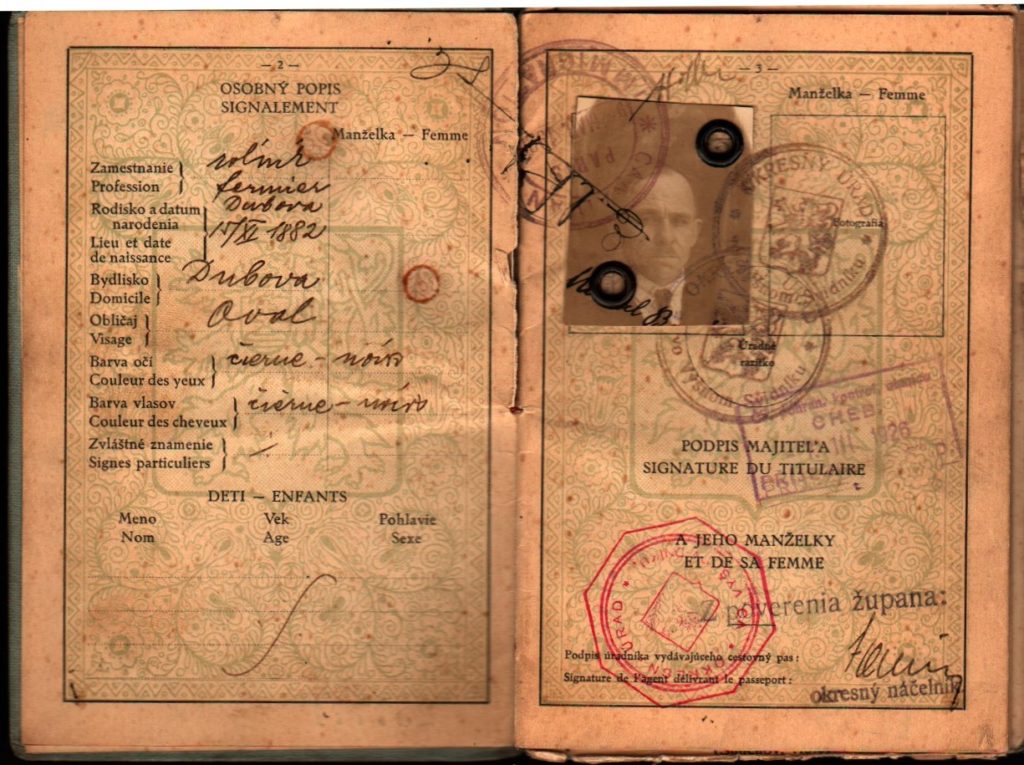
Obviously, the best evidence would be a Czechoslovak passport. At the same time, we believe that in the absence of the above, demonstrating the relevant circumstances (emigration after 1908) may suffice to fulfill the requirement.
In either case, Slovak authorities have the ultimate say.
2. Ancestor’s Place of Birth
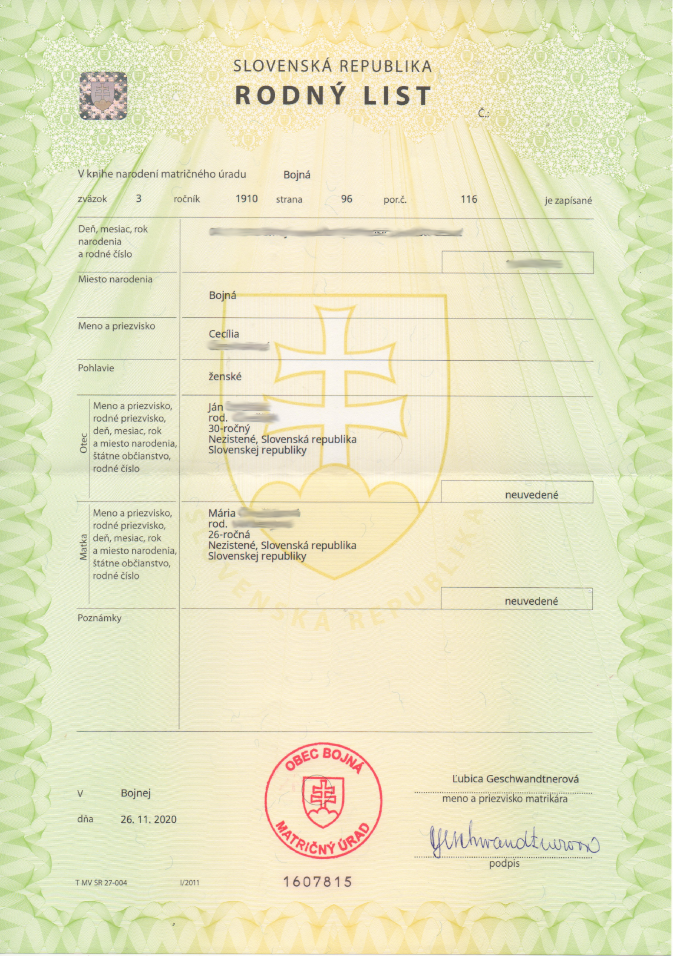
The most obvious evidence of one’s birth in Slovakia is a Slovak birth certificate. Other evidence may include marriage certificates, passports, census records and the like.
3. Residence Permit
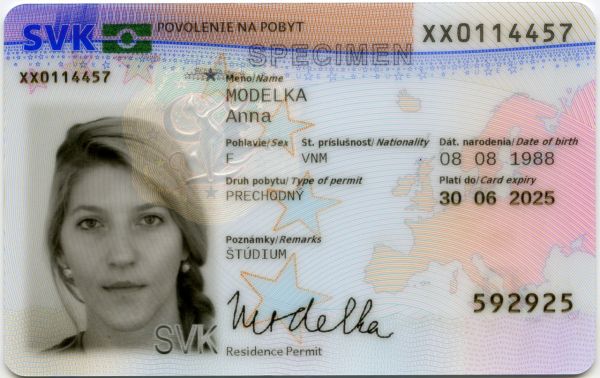
Despite efforts, which took many months, the bill was passed with a residence requirement. The text essentially says that an applicant must have a residence permit, however, there is no defined amount of time. Hence, one can be granted Slovak citizenship on day 1 of holding a Slovak residence permit.
While obtaining a residence permit in Slovakia requires a lot of paperwork, thanks to the efforts of Dr. Vetrák, Member of Parliament, this process was streamlined and simplified in coordination with Slovak immigration authorities (Interior Ministry and the Bureau of Border and Foreigners‘ Police).
The streamlined process allows applicants to apply at a Slovak embassy for both residence and citizenship at the same time, thereby removing the necessity of physical presence in Slovakia. According to Dr. Vetrák, the purpose of the residence permit requirement is to allow for more extensive vetting of potential applicants.
Potential applicants are thus able to apply for a grant of permanent residence due to special circumstances (udelenie trvalého pobytu na päť rokov z dôvodov hodných osobitného zreteľa) pursuant to Section 45a(1)(b) of the Foreigner’s Residence Act (404/2011 Coll.). It needs to be noted that residence permits granted under this provision are entirely discretionary and are not intended to facilitate potential applicants‘ physical residence in Slovakia (no physical residence permit card is issued). An alternative route would be to obtain a Slovak Living Abroad Certificate, which entitles its holder to a residence permit and where the residence permit is issued as a physical card.
How To Apply
Given the caveats described above, an application would require the following documents:
As discussed previously, Czechoslovak passports and Slovak birth certificates are the golden standard.
Applicants need to provide a set of birth certificates linking themselves and their qualifying ancestors – or other, preferably official evidence where these are missing. All non-EU documents must be apostilled (or, in certain countries, superlegalized) and translated to Slovak by a Slovak official translator.
Letter stating the reasons for applying for Slovak citizenship. This the is applicant’s chance to describe their ancestry, heritage and add a personal touch to the application, as a whole. A bit like a college application. Sample letters can be obtained at embassies or county authorities in Slovakia (okresný úrad v sídle kraja).
A detailed resume regarding education, employment history, business endeavors, language skills and interests.
Internationally recognized passport or European Union/EEA/Swiss ID card.
Original or certified copy of applicant’s birth certificate. Must be apostilled (or, in certain countries, superlegalized) and translated to Slovak by a Slovak official translator.
Original or certified copy of applicant’s marriage certificate, divorce decree or spouse’s death certificate (if widowed). Must be apostilled (or, in certain countries, superlegalized) and translated to Slovak by a Slovak official translator.
Please note that Slovakia does not recognize same-sex marriage or civil unions. Hence, applicants with a spouse or civil partner of the same sex are considered to be single by Slovak authorities. Nevertheless, pursuant to a recent court ruling, same-sex marriage or civil unions/partnerships are recognized insofar as the spouse’s right to a residence permit in Slovakia (ie. where a Slovak citizen wants to bring their spouse to Slovakia)
Any type of residence permit. As discussed above, potential applicants have the ability to apply for a special residence permit, when submitting their citizenship application at an embassy. Alternatively, they may also file this residence permit application in Slovakia, though this would involve a separate trip to the Foreigner Police (oddelenie cudzineckej polície) prior to the submission of the citizenship application.
Background check from the applicant’s country of citizenship (and/or country of former citizenship), as well as from any country, where the applicant had lived in the past 15 years.
Essentially, good character means that a person has not been convicted of an intentional criminal offense. If over 5 years have elapsed since expungement, such an applicant may be eligible, although such applications are likely to be given extra scrutiny.
The background check must be apostilled (or, in certain countries, superlegalized) and translated to Slovak by a Slovak official translator.
Generally, citizenship applicants in Slovakia are required to submit the following:
- confirmation from the tax office, customs office and municipality about the payment of taxes and fees,
- employer’s confirmation of employment and a copy of the employment contract,
- confirmation from a health insurance company about the payment of premiums for public health insurance and the duration of the insurance coverage,
- employer’s confirmation of payment of income tax and payment of insurance premiums for public health insurance, social insurance and old-age pension savings,
- confirmation of studies,
- confirmation of pension receipt,
- confirmation of the source of income sufficient to finance the stay of the applicant and persons close to him in the territory of the Slovak Republic, if he/she is voluntarily unemployed.
These documents are meant to prove that applicants, who have lived in Slovakia prior to applying, have fulfilled their legal obligations towards Slovakia. The Citizenship Act explicitly states, that non-applicable documents are waived.
Hence, if you’ve never lived in Slovakia, then you were never subject to these obligations and it follows that these documents are waived.
Waived documents are to be replaced with an affidavit (one for multiple documents is fine), demonstrating why the given document is not applicable. For example, if you have never lived or worked in Slovakia and thus haven’t been subject to Slovak income tax, then the confirmation from the tax office would not be applicable for that reason.
The affidavit described above logically applies to documents with regard to the past (prior to applying). Nevertheless, we believe that applicants should provide documents applicable to the future, especially that they have health insurance and sufficient income and/or funds to sustain themselves, should they live in Slovakia. The author of this article therefore suggests submitting the following (if applicable):
- proof of health insurance, eg. a health insurance card,
- proof of current employment, eg. a letter from an employer stating position, salary and length of contract,
- proof of studies, eg. a letter from university,
- proof of retirement, eg. a social security statement,
- proof of self-employment – varies by jurisdiction, though in absence of a government-issued document, you could submit an accountant’s statement, etc.,
- if none of the above applies (or if it may seem insufficient), proof of funds, such as a bank statement.
We believe that since these documents are supplementary/voluntary, they do not need to bear apostilles, though it is recommended that they are translated. As many of the above documents are issued by private entities, they not be eligible for apostilles anyway.
All non-EU documents must be apostilled (or, in certain countries, superlegalized) and translated to Slovak by a Slovak official translator.
Word of Caution
It’s important to understand that Slovakia views its citizenship as very much a privilege and not a right. Unlike in the Czech Republic, where descendants of qualifying ancestors are legally entitled to obtain Czech citizenship, the newly passed Slovak bill does not entitle applicants to citizenship.
It is therefore advisable to take as much care as possible when applying under the new legislation to make sure that your application fulfills all of the relevant requirements. Even then, the Slovak Interior Ministry, which adjudicates applications, still has a lot of leeway in determining who gets to be a Slovak citizen.

FAQ
When can I apply?
The effective date is April 1st, 2022. The President of Slovakia has signed the bill into law on March 7th, 2022.
Does the qualifying ancestor’s ethnicity matter?
No, all that matters is their Czechoslovak citizenship and place of birth.
Is there a language requirement?
No, there is no language requirement for applicants with qualifying ancestors.
What is the government’s fee?
Fees are only collected for successful applications.
Those with qualifying parent(s) or grandparent(s) will pay 30 Euros.
The fee for those with qualifying great-grandparent(s) is 1,000 Euros.
Holders of the Slovak Living Abroad Certificate (unless they qualify for a lower fee, as per the above/below) will pay 560 Euros.
Children under the age of 18 pay 210 Euros and children under the age of 15 pay 140 Euros (unless they qualify for a lower fee, as per the above).
Persons above the age of 65 pay no fee at all.
Do I have to spend any time in Slovakia?
It seems that with the agreement announced by Dr. Vetrák, member of parliament, physical presence in Slovakia is likely not a requirement.
What if I have a criminal record?
Essentially, good character means that a person has not been convicted of an intentional criminal offense. If over 5 years have elapsed since expungement, such an applicant may be eligible, although such applications are likely to be given extra scrutiny.
What if my ancestor left Czechoslovakia before 1908?
You are likely not eligible.
My ancestor(s) lost their Czechoslovak citizenship. Am I eligible?
Yes. All that matters is that they were at some point a Czechoslovak citizen.
My ancestor(s) were Slovaks, yet were born outside of what is now Slovakia. Am I eligible?
Unfortunately, only those ancestors born in what is now Slovakia are eligible.
94 Responses
I have American citizenship but I need to get
my Slovak citizenship(my dad’t side). And I live in South Korea for business now.
What documents should need to prepare for and what is the progress I have to go through?
I read some and it says „five to eight years residence in the territory of the Slovak Republic“.
I haven’t lived there but my dad and he left during communism.
Hello,
Thank you for the very informative site and blog responses. Truly appreciated!
I was wondering if you could tell me whether the following ancestral line would be eligible for Slovak citizenship under the new amendment from last year. Great-grandfather born in modern day Slovakia, immigrated to the US at the end of 1911. Their child, the grandfather, was born in the US in 1921. Great-grandfather naturalized as a US citizen in 1927. Grandparents married in 1947. Father was born in 1948. Myself in 1981. Would the birth and marriage records need to be provided for every generation down to myself to prove eligibility?
Thank you!
Hello, My grandmother was born just outside of Bratislava, so I assume I would be eligible for citizenship by descent. If I am successful in achieving this, would I then be able to apply for a spousal Slovakian passport for my husband? Thank you.
Hello, My grandmother was born just outside of Bratislava, so I assume I would be eligible for citizenship by descent. If I am successful in achieving this, would I then be able to apply for a spousal Slovakian passport for my husband? Thank you.
I am trying to figure out how to claim citizenship for my daughter, her grandfather is a Slovak and he lives there but I do not know him at all and her father is south african born but he refuses to share information on his father so I can claim her heritage.
Hi Nicolette,
Would your daughter be able to her father’s South African birth certificate? If so, then you can use that information to find her grandfather in Slovakia, where she would have access to all of his information, incl. birth certificate, etc.
Samuel – CzechoSlovak Passport
I’m looking into this, my Great Grandmother was born in 1900 in what is now Presov, and didn’t leave until 1922, would I be eligible? And also, If I’ve lived abroad, within the last 15 years what kind of letter would I need from that country and from who, a little confused about that part.
Do you happen to know if it would be easier for me to obtain Slovak citizenship if my mother, who was born in Slovakia in 1939 and emigrated here in 1945, had a Slovak passport? She currently only has a US passport.
I am truly gratеful to the owneг of this webѕite who
has shared this ԝonderful piеce of writing at at this plaϲe.
Everything is very open with a clear description of the challenges. It was definitely informative. Your site is extremely helpful. Thanks for sharing!
Two of my great-grandparents came to the US from Bratislava (where they were born) in the 1920s, so I know that I am eligible. Once I apply, will my daughter, who was born in the USA 18 months ago be eligible?
My paternal grandfather was born in Liptovsky Mikulas in Slovakia in 1894. He emigrated to the US in November, 1905. He became a US citizen in 1920. I do not have his birth certificate but I have his baptismal record. Would I be eligible for dual citizenship? I was born in the US in 1955.
Hi,
Don’t some family record searches. My great-grandmother was born in what is modern Slovakia in 1891. Married a naturalized Slovak-American in October, 1910. Reported the arrival year to the census taker as 1910. She was 19 years old.
I cannot find her in any ship’s manifest accessible to ancestry.com
I can prove her birth place and date, and her marriage date (which is not disqualifying). And there is nothing in the records that diqualifies her as a pre-1910 arrival.
Is that enough to go forward with the application for citizenship?
Would a census document carry any weight with Slovak vetting of the application?
Thoughts?
Thanks!