DISCLAIMER:
This article originally claimed that 1904 was the decisive year because wartime suspended the application of certain rules pertaining to citizenship. This interpretation has been rejected by Slovak authorities.
Other information regarding loss of citizenship after a 10-years‘ absence and the concept of the right of residence remains undisputed.
TLDR: People from Slovakia became citizens of Czechoslovakia in 1920 regardless of where in the world they were physically. In order for that to have happened, they had to have had the „right of residence“ within a municipality that became Czechoslovakia and in order to possess that right, they had to have been citizens of the Kingdom of Hungary. Being absent from the Kingdom for longer than 10 years led to loss of citizenship. Assuming that wartime suspended the application of the 10-years‘ rule (which is currently disputed by Slovak authorities), since WWI broke out in July 1914, the vast majority of people who had emigrated before July 1904(ie. spent more than 10 years abroad before war broke out) lost their citizenship, hence also lost their „right of residence“, hence couldn’t become a Czechoslovak citizen. There are certain exemptions discussed below. [is this the longest TLDR ever? ?]

The Long Version
Kingdom of Hungary and the Right of Residence
The Kingdom of Hungary (as a semi-sovereign part of the Austro-Hungarian Empire) had a concept called the „right of residence“ [községi illetőség, more literally „municipal jurisdiction“]. This is something that is akin to the concept of permanent residence, but is really more like a municipal citizenship – one would get it from their parents, regardless of where he or she resided and a process that looked almost like modern-day naturalization was required to change this „right of residence“ to a different municipality. This right entitled the person to social care in the municipality to which they belonged and they could even be deported to that municipality, if an another municipality deemed them a nuisance (it was a handy way for big cities to kick out beggars). The concept was codified in Hungary in 1871.
How do we determine who is a Czechoslovak citizen?
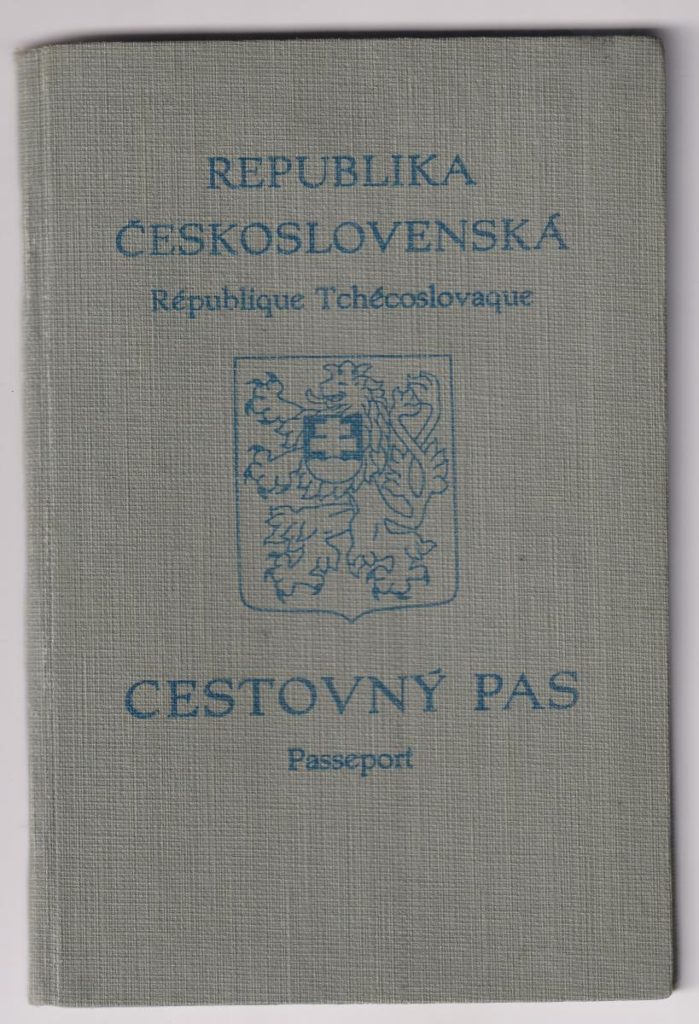
After Czechoslovakia was founded, legislators were faced with a problem: How do we determine who is a citizen? The territory was a mess when it came to ethnicities and migration. One might think they could’ve just used jus soli, ie. consider everyone born in what became Czechoslovakia a citizen. But what if someone was the child of the much hated Austrian or Hungarian bureaucrats, who had previously persecuted the aspiring nationalists while being posted in Czechia or Slovakia? What if a Czech or a Slovak was born outside of Czechoslovakia, while their father was serving in the military or held a government job in Vienna or Krakow back when it was all one country? What if Czechoslovakia decided to treat its German or Hungarian speaking minorities unfairly?
So, when the founders of Czechoslovakia created the law (a constitutional amendment), which determined who was a citizen of the new nation, they needed something to establish who „truly“ belonged to the territory. Using the concept of the right of residence was an obvious choice. In fact, it was the agreed method established in WW1 peace treaties. Thus, when Section 1 of the Constitutional Amendment was passed in 1920 (and I beg my constitutional law professors to forgive me for using this extremely inaccurate term), it stipulated, among other things, that all those who have continuously held the right of residence on Czechoslovak territory since at least 1910 were to be considered citizens.
Why was the act only passed in 1920 if Czechoslovakia had been founded in 1918 and even the act itself is effective from 1918? The answer is simple – the Prague government did not control Slovakia until 1920, when the Treaty of Trianon was finally signed. When faced with this problem, legislators opted for the law to work retroactively from 1918, despite being passed in 1920.
§1 Czechoslovak citizens are:
1. Effective October 28, 1918, persons who, at the latest on January 1, 1910 acquired and have since continuously held the right of residence in the territory of the former Austro-Hungarian Empire, which now belongs to the Czechoslovak Republic.
Constitutional Act no. 236/1920 Coll., on State Citizenship and the Right of Residence
Back in the USSR Kingdom of Hungary
Now in order to understand the essence of the 1904 rule, one must also understand the dynamic between the right of residence and citizenship. The former concept, as it was conceived in the Kingdom of Hungary back in 1886, was inherently tied to that of (state-level) citizenship – the law stipulated that every Hungarian citizen had to belong to a municipality. Hence, it is also implicit that one could not have held this privilege of the right of residence (and therefore the entitlement to social care of the state/municipality) without also being a citizen of the Kingdom of Hungary, which is something that the Czechoslovak Supreme Court later affirmed (Rv II 354/28). One could argue it was in a way a subsystem of the „main“ Kingdom-level citizenship.
§ 6
Every citizen must belong to a municipality.
Act XVIII of 1871 on the Administration of Municipalities
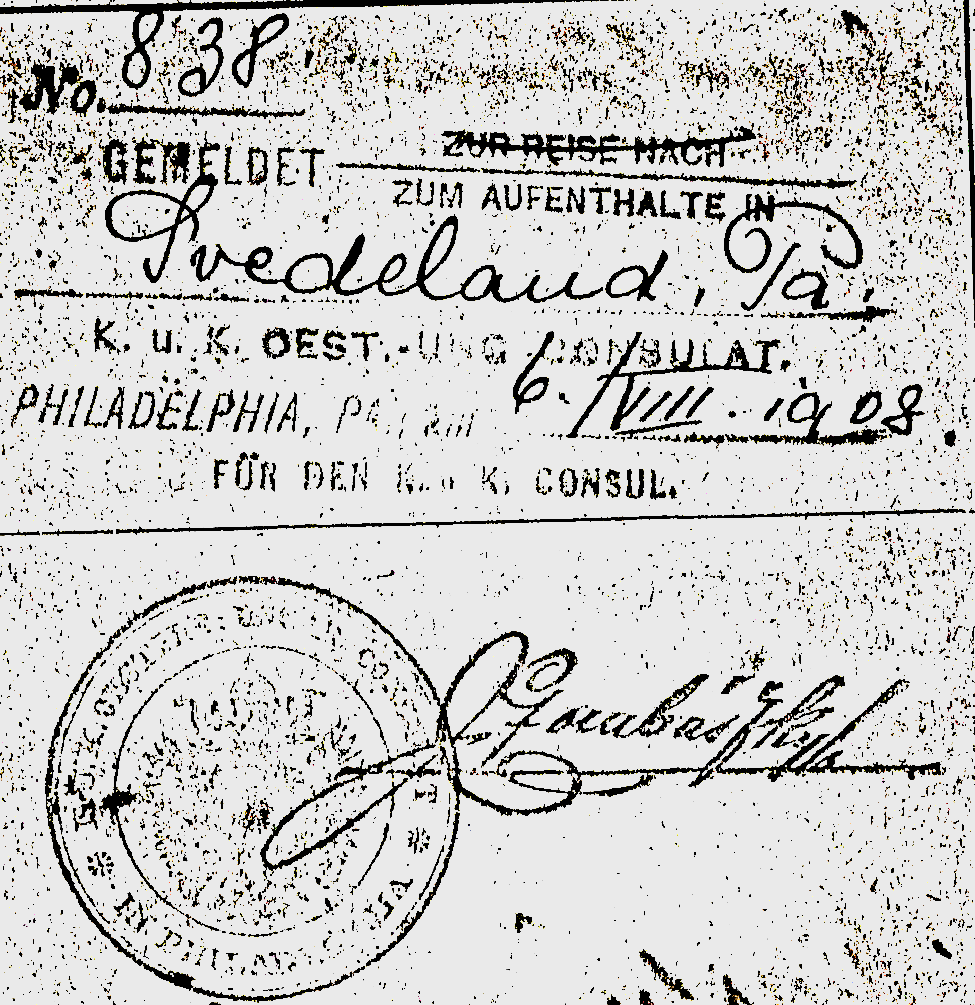
The Imperial and Royal Austro-Hungarian Consulate in Philadelphia“
Example of a Slovak emigrant reporting their stay in 1908
If one had to have been a Hungarian citizen in order to have retained their right of residence, then we must look at what affected someone’s Hungarian citizenship in the first place. The Kingdom passed its first ever (and inadvertently also last ever) codified Citizenship Act in 1879. This law established who was a Hungarian citizen, how citizenship could have been acquired or relinquished and most importantly for the topic of this blog – how absence affected one’s Hungarian citizenship.
The law stipulated in its now infamous Section 31 that an uninterrupted absence of over 10 years from the Kingdom meant automatic loss of Hungarian citizenship. This loss extended not only to the person involved, but if they were a male, also to his wife (given they lived together) and his minor children.
One could take certain actions in order to prevent this from happening, such as getting a new passport abroad, reporting their stay to a consulate or letting their home municipality know they were still interested in keeping their citizenship. Obviously, setting foot on Hungarian soil would also interrupt this dreaded clock. Another implicit factor, which would interrupt this period, was war.
§ 31. Absence.
A Hungarian citizen who resides outside the territory of the Hungarian Crown for 10 years without interruption and without the assignment of the Hungarian government or the Austrian Hungarian common ministers, loses his or her Hungarian citizenship.
The period of absence shall be counted from the day on which the person left the territory of the Hungarian Crown without notifying the competent authority specified in Section 9 of the maintenance of his Hungarian citizenship; or if he/she left with a passport, from the day on which the passport expired.
Continuity of absence is interrupted by notifying the above-mentioned competent authority of the retention of Hungarian citizenship, or by obtaining another passport, or by obtaining a residence permit from an Austro-Hungarian consular office, or by being entered in the register of an Austro-Hungarian consular office.§ 32. The loss of Hungarian citizenship in this way extends to the cohabitating wife of the absent man and to the minor children under his paternal authority.
Act L of 1879 on the Acquisition and Loss of Hungarian State Citizenship
World War I
DISCLAIMER:
This interpretation has been rejected by Slovak authorities.
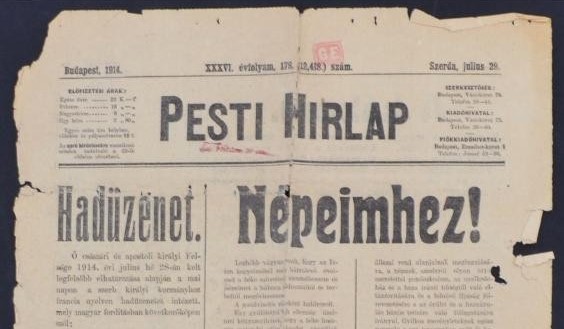
On 28 June 1914, Archduke Franz Ferdinand, the heir of the Austro-Hungarian Empire was assassinated in Sarajevo, Bosnia. This lead to an ultimatum, which ran out on 28 July 1914 and the monarchy declared war on Serbia, starting World War I and a state of war within the constituent Kingdom of Hungary. As mentioned previously, war was a factor, which implicitly interrupted the usual legal processes, including that of the 10 year absence period under the Citizenship Act of 1879. Thus, if we count back 10 years from 28 July 1914, we get the ultimate deadline of 28 July 1904. Therefore, no one who left on or after 29 July 1904 could ever lose their Hungarian citizenship by virtue of being absent, as the 10 year period couldn’t elapse without being interrupted by the state of war in 1914.
So 1904 is the decisive year, right?
DISCLAIMER:
This interpretation has been rejected by Slovak authorities.
Yes and no. It’s indeed possible that someone emigrated before 1904, yet retained their Hungarian citizenship and thus became a Czechoslovak citizen, but it’s also possible that someone, who had emigrated after 1904 inadvertently lost their Hungarian citizenship.
The discussion within this post is mostly limited to the institute of loss of citizenship due to absence, however there are other ways, in which one could lose their citizenship, as well as ways for emigrants to preserve their citizenship (some of which were already mentioned). Nevertheless, it’s important to realize that in order to comprehensively cover the nuances, one must have a good understanding of 18th and 19th century Hungarian jurisprudence. In this post, I have only relied on Norbert Varga, PhD., who is an assistant professor of the Hungarian Legal History Department at the University of Szeged’s Faculty of Law, whose academic articles (1, 2) are the only English language sources I could find on this topic. As a very complex and nuanced issue, it is possible that other academics may holder different opinions and it’s very difficult to cross reference Dr. Varga’s work with the jurisprudence from that time.
Despite the difficulty of interpretation, when it comes to legislation and legal doctrines this old, I will attempt to introduce certain ways, in which citizenship could have been lost or preserved, regardless of the 1904 deadline (in addition to the methods mentioned already).
Ways in which one could preserve their citizenship
Dodging the draft
Male Hungarian citizens would join the military from the ages of 17 (voluntarily) and 20 (mandatorily). There were certain exemptions, which are nevertheless too complex to delve into. The most significant issue with showing that an ancestor held on to their citizenship (and thus later became a Czechoslovak citizen) is the fact that many military records have been lost/destroyed and so it’s oftentimes almost impossible to say with certainty, whether an ancestor had served in the Austro-Hungarian military. Because it is an exception to the rule, the burden of proof is on the person claiming their ancestor didn’t serve.
Being a minor
Because minors did not have legal capacity to act, they could not lose their citizenship by reason of absence. It’s nevertheless unclear, when the absence period would start to be counted – the most likely answer is the moment they reached the age of majority, ie. 24 years of age.
Having a child that reached military age
This encompassed the time between that child’s 17th year of age and 24th birthday, ie. the child would have been eligible (or required) to serve, yet their father’s loss of citizenship would have prevented them from doing so. After the 24th birthday, the child was considered an adult, who was no longer under their father’s paternal authority, yet was still required to serve. It therefore seems logical that it is from that moment that the father’s 10-years‘ clock had started, while the child was still covered by the „draft dodger“ exemption.
Receiving benefits from the state
No one who received any pensions or similar benefits could lose their citizenship.
Women who resided separately from their husbands
It is clear that women, who did not live with their husband when he lost his citizenship were unaffected, but it remains unclear what happened when such a woman joined her husband abroad after he had lost his citizenship. One could argue either that since the „loss event“ happened in the past, while the wife was unaffected, it couldn’t affect her retroactively. At the same time, one could also argue that this wife’s „loss of citizenship“ was suspended and took place once the wife joined her husband abroad.
Ways in which one would lose their citizenship regardless of when they emigrated
Women, who married non-citizens
The most common way for women to lose their citizenship was by marriage to a non-citizen. One must understand that in most places at the time, women’s citizenship was connected to their husbands‘ status and women would often gain citizenship by marriage, as was the case in Hungary. It was therefore assumed that women would acquire a foreign citizenship and thus the law provided for a loss of Hungarian citizenship. Women, who married stateless men, lost their citizenship despite becoming stateless themselves.
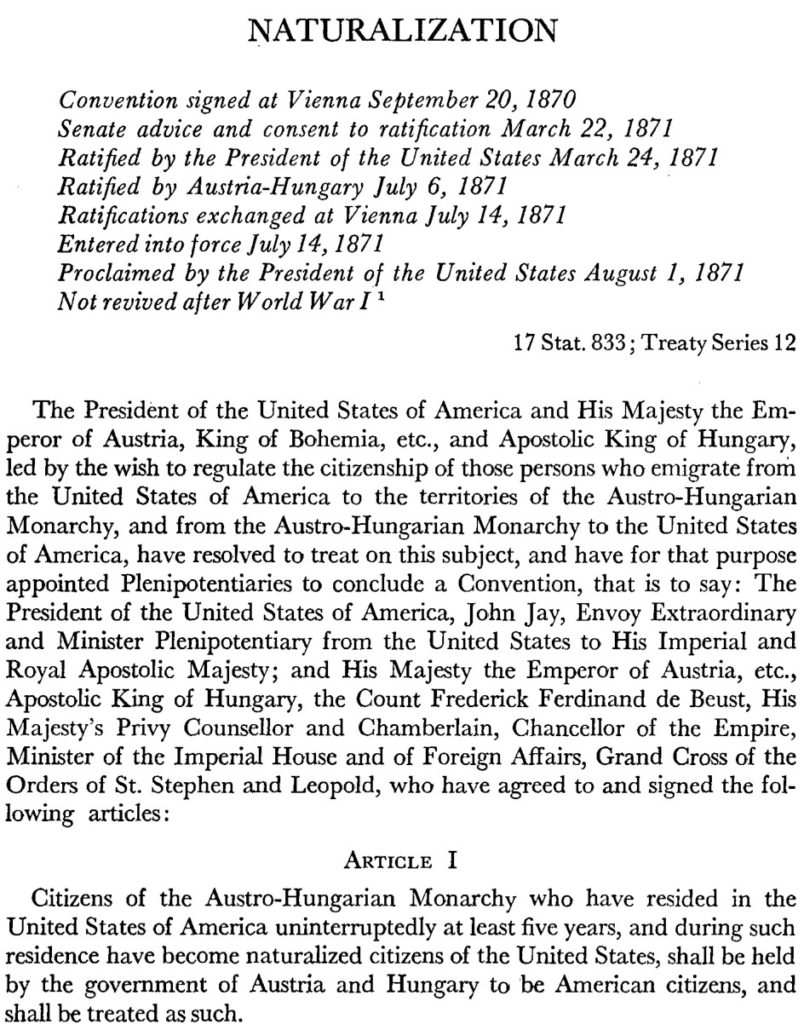
Naturalization in the United States
All those who naturalized in the United States after 1871 (and until the end of Austria-Hungary) would lose their Hungarian citizenship pursuant to an international treaty.
68 Responses
I’ve been surfing on-line more than three hours nowadays,
but I never found any interesting article like yours.
It is beautiful value enough for me. In my view, if all site owners and bloggers made good content material as you probably did, the internet will likely be
a lot more helpful than ever before.
Estimado,
una consulta puntual:
Mi bisabuelo nació en Dobrá, Trebišov – Eslovaquia en 1908.
Emigro a la Argentina en 1.932
Es posible que sea elegible para la ciudadania?
My great-grandfather born on March 22, 1902 in Vesoka, Czechoslovakia, and emigrated as a minor to the USA from Hamburg, Germany on the 24th of March 1909 and arrived in New York on the 1st of April 1909. His USA Naturalization was subscribed and sworn on April 3, 1926 by the Deputy Court, but his petition began on the 1st of January, 1920. I am curious if I would qualify for Slovak citizenship by descent given he was a minor when he emigrated to the USA.
Hmm it looks like your website ate my first comment (it
was extremely long) so I guess I’ll just sum it up what I had written and say, I’m thoroughly enjoying your blog.
I as well am an aspiring blog blogger but I’m still new to everything.
Do you have any recommendations for inexperienced blog writers?
I’d definitely appreciate it.
My site; https://www.cucumber7.com/
Hello! I have a very complex situation that deals with having a child that has reached military age. My great-grandfather was born in Hungary and immigrated to the United States in 1908. I have his passport from that journey. In that passport it lists 2 sons (my granduncles) who were minors at the time. One was born in 1895 and one was born in 1905. They were both born in Hungary and had Hungarian citizenship. My grandfather was born here in the United States in 1916. Since my great grandfather had not naturalized in the US at that point, he was still Hungarian, which meant my grandfather was born Hungarian (his married father was Hungarian) and American as he was born in the US. Here is where it gets interesting, my granduncle who was born in 1895 turned 17 in 1912 and achieved the age of majority (24) in 1919, before the 10 years lapsed for my great grandfather (since he had a passport, my understanding is that the initial 10 year period started in October of 1909 and his oldest son reached the age of majority in August 1919. So I understand that to mean that a new 10 year period began that would have lasted until August 1929. During that time, his second son achieved the age of majority in July 1929, which would have reset the clock once again until July 1939. Then my grandfather turned 17 in 1933 and achieved the age of majority in September of 1940, which by that time I believe the law was changed and citizenship could no longer be caused by absence after 1939. So, my contention is that since he had 3 sons, all of whom turned military age at different points in time, essentially resetting the 10 year clock each time means that it the case of my grandfather, he never lost his Hungarian citizenship and would have passed it on to my father when he was born in the early 40’s, and then my father passed it on to me in the 70’s.
If the 1904 rule has been rejected by Slovak authorities then what the correct way to determine if a relative was a Czechoslovak citizen? My great grandfather immigrated in 1906. Is it possible he would have been considered a Czechoslovak?
Samuel,
It seems I may have hit a dead end in my CBD journey. I am working with a law firm in Slovakia. They are telling me that Czechoslovak citizenship was not automatically granted to Austro-Hungarian citizens living abroad in 1918.
The details on my ancestry.
My anchor ancestor is my GGF. He was born in Bratislava 1912 and arrived in the states in 1913. My Great Great grandfather became A US citizen on May 26, 1921. Because my great grandfather was a minor he also became a U.S citizen that day under his father. Czechoslovakia was established in Nov 1918, and It was my understanding that all people born in the Austro-Hungarian empire who left after 1910 that hadn’t taken another citizenship gained defacto Czechoslovakian citizen Nov 1918.
What do you think?
Any input is greatly appreciated. Thanks!
So great grandfather was born in modern day Slovakia region, and then left modern day Slovakia in approx 1905 to United States. Would they have been considered a citizen until 1915? If yes, then they would have still been considered a Czech citizen after 1910 and therefore I am eligible for citizenship by descent ?
Hi Samuel,
Fantastic work here – really appreciate it! My great-grandfather came to the USA in 1897 from Slovakia but his draft card from WW1 in 1918 lists him as a citizen of Hungary. Additionally, both the 1920 and 1930 censuses denotes he is an Alien, the 1930 census noting that he was born in Czechoslovakia. Would this suffice to prove to Slovakian authorities that he was a Hungarian citizen. Would much appreciate your thoughts!
Hi Samuel … I welcome your thoughts on my situation. My grandfather was born in Medzilaborce (now part of Slovakia) in 1887. He served in the Austro-Hungarian army during WWI. He came to the US in June, 1921 from Hungary and became a naturalized US citizen in 1927. I have his birth, elementary school records, military ID card, and naturalization document.
When I originally left a comment I appear to have clicked the -Notify me when new comments are added- checkbox and from now on whenever a comment is added I recieve four emails with the exact same comment. Perhaps there is a means you are able to remove me from that service? Kudos!
Good post. I learn something totally new and challenging on blogs I stumbleupon on a daily basis. Its always useful to read content from other authors and practice something from their websites.