DISCLAIMER:
This article originally claimed that 1904 was the decisive year because wartime suspended the application of certain rules pertaining to citizenship. This interpretation has been rejected by Slovak authorities.
Other information regarding loss of citizenship after a 10-years‘ absence and the concept of the right of residence remains undisputed.
TLDR: People from Slovakia became citizens of Czechoslovakia in 1920 regardless of where in the world they were physically. In order for that to have happened, they had to have had the „right of residence“ within a municipality that became Czechoslovakia and in order to possess that right, they had to have been citizens of the Kingdom of Hungary. Being absent from the Kingdom for longer than 10 years led to loss of citizenship. Assuming that wartime suspended the application of the 10-years‘ rule (which is currently disputed by Slovak authorities), since WWI broke out in July 1914, the vast majority of people who had emigrated before July 1904(ie. spent more than 10 years abroad before war broke out) lost their citizenship, hence also lost their „right of residence“, hence couldn’t become a Czechoslovak citizen. There are certain exemptions discussed below. [is this the longest TLDR ever? ?]

The Long Version
Kingdom of Hungary and the Right of Residence
The Kingdom of Hungary (as a semi-sovereign part of the Austro-Hungarian Empire) had a concept called the „right of residence“ [községi illetőség, more literally „municipal jurisdiction“]. This is something that is akin to the concept of permanent residence, but is really more like a municipal citizenship – one would get it from their parents, regardless of where he or she resided and a process that looked almost like modern-day naturalization was required to change this „right of residence“ to a different municipality. This right entitled the person to social care in the municipality to which they belonged and they could even be deported to that municipality, if an another municipality deemed them a nuisance (it was a handy way for big cities to kick out beggars). The concept was codified in Hungary in 1871.
How do we determine who is a Czechoslovak citizen?
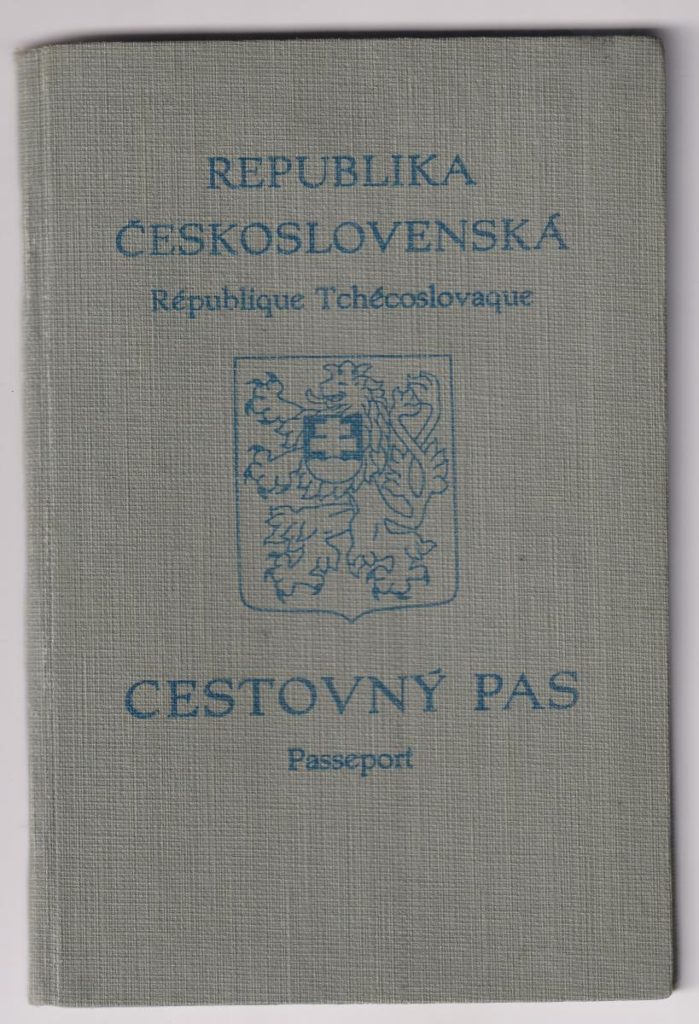
After Czechoslovakia was founded, legislators were faced with a problem: How do we determine who is a citizen? The territory was a mess when it came to ethnicities and migration. One might think they could’ve just used jus soli, ie. consider everyone born in what became Czechoslovakia a citizen. But what if someone was the child of the much hated Austrian or Hungarian bureaucrats, who had previously persecuted the aspiring nationalists while being posted in Czechia or Slovakia? What if a Czech or a Slovak was born outside of Czechoslovakia, while their father was serving in the military or held a government job in Vienna or Krakow back when it was all one country? What if Czechoslovakia decided to treat its German or Hungarian speaking minorities unfairly?
So, when the founders of Czechoslovakia created the law (a constitutional amendment), which determined who was a citizen of the new nation, they needed something to establish who „truly“ belonged to the territory. Using the concept of the right of residence was an obvious choice. In fact, it was the agreed method established in WW1 peace treaties. Thus, when Section 1 of the Constitutional Amendment was passed in 1920 (and I beg my constitutional law professors to forgive me for using this extremely inaccurate term), it stipulated, among other things, that all those who have continuously held the right of residence on Czechoslovak territory since at least 1910 were to be considered citizens.
Why was the act only passed in 1920 if Czechoslovakia had been founded in 1918 and even the act itself is effective from 1918? The answer is simple – the Prague government did not control Slovakia until 1920, when the Treaty of Trianon was finally signed. When faced with this problem, legislators opted for the law to work retroactively from 1918, despite being passed in 1920.
§1 Czechoslovak citizens are:
1. Effective October 28, 1918, persons who, at the latest on January 1, 1910 acquired and have since continuously held the right of residence in the territory of the former Austro-Hungarian Empire, which now belongs to the Czechoslovak Republic.
Constitutional Act no. 236/1920 Coll., on State Citizenship and the Right of Residence
Back in the USSR Kingdom of Hungary
Now in order to understand the essence of the 1904 rule, one must also understand the dynamic between the right of residence and citizenship. The former concept, as it was conceived in the Kingdom of Hungary back in 1886, was inherently tied to that of (state-level) citizenship – the law stipulated that every Hungarian citizen had to belong to a municipality. Hence, it is also implicit that one could not have held this privilege of the right of residence (and therefore the entitlement to social care of the state/municipality) without also being a citizen of the Kingdom of Hungary, which is something that the Czechoslovak Supreme Court later affirmed (Rv II 354/28). One could argue it was in a way a subsystem of the „main“ Kingdom-level citizenship.
§ 6
Every citizen must belong to a municipality.
Act XVIII of 1871 on the Administration of Municipalities
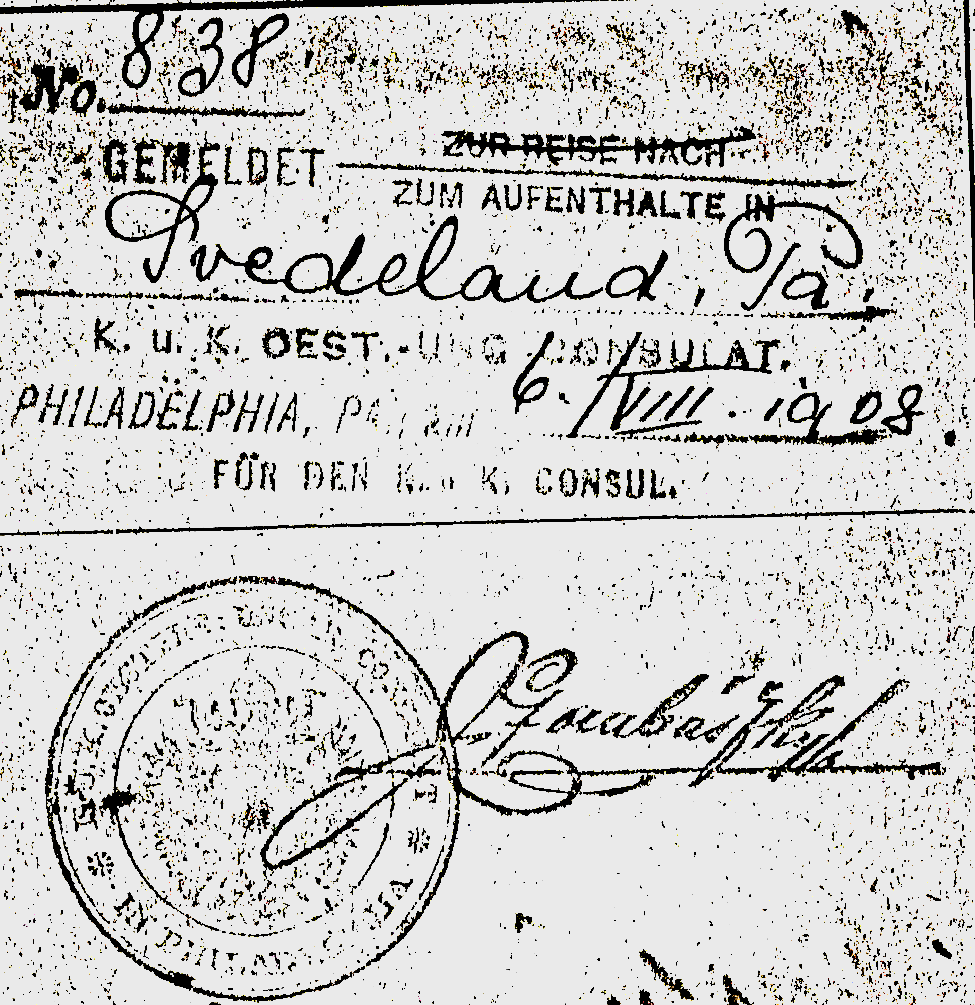
The Imperial and Royal Austro-Hungarian Consulate in Philadelphia“
Example of a Slovak emigrant reporting their stay in 1908
If one had to have been a Hungarian citizen in order to have retained their right of residence, then we must look at what affected someone’s Hungarian citizenship in the first place. The Kingdom passed its first ever (and inadvertently also last ever) codified Citizenship Act in 1879. This law established who was a Hungarian citizen, how citizenship could have been acquired or relinquished and most importantly for the topic of this blog – how absence affected one’s Hungarian citizenship.
The law stipulated in its now infamous Section 31 that an uninterrupted absence of over 10 years from the Kingdom meant automatic loss of Hungarian citizenship. This loss extended not only to the person involved, but if they were a male, also to his wife (given they lived together) and his minor children.
One could take certain actions in order to prevent this from happening, such as getting a new passport abroad, reporting their stay to a consulate or letting their home municipality know they were still interested in keeping their citizenship. Obviously, setting foot on Hungarian soil would also interrupt this dreaded clock. Another implicit factor, which would interrupt this period, was war.
§ 31. Absence.
A Hungarian citizen who resides outside the territory of the Hungarian Crown for 10 years without interruption and without the assignment of the Hungarian government or the Austrian Hungarian common ministers, loses his or her Hungarian citizenship.
The period of absence shall be counted from the day on which the person left the territory of the Hungarian Crown without notifying the competent authority specified in Section 9 of the maintenance of his Hungarian citizenship; or if he/she left with a passport, from the day on which the passport expired.
Continuity of absence is interrupted by notifying the above-mentioned competent authority of the retention of Hungarian citizenship, or by obtaining another passport, or by obtaining a residence permit from an Austro-Hungarian consular office, or by being entered in the register of an Austro-Hungarian consular office.§ 32. The loss of Hungarian citizenship in this way extends to the cohabitating wife of the absent man and to the minor children under his paternal authority.
Act L of 1879 on the Acquisition and Loss of Hungarian State Citizenship
World War I
DISCLAIMER:
This interpretation has been rejected by Slovak authorities.
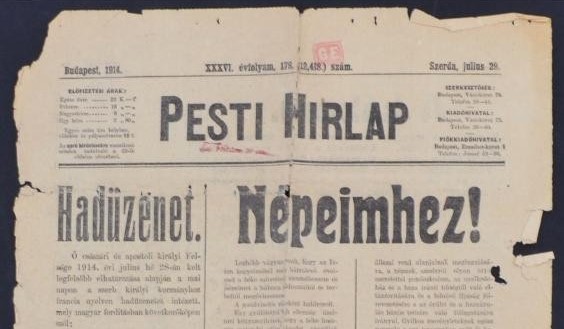
On 28 June 1914, Archduke Franz Ferdinand, the heir of the Austro-Hungarian Empire was assassinated in Sarajevo, Bosnia. This lead to an ultimatum, which ran out on 28 July 1914 and the monarchy declared war on Serbia, starting World War I and a state of war within the constituent Kingdom of Hungary. As mentioned previously, war was a factor, which implicitly interrupted the usual legal processes, including that of the 10 year absence period under the Citizenship Act of 1879. Thus, if we count back 10 years from 28 July 1914, we get the ultimate deadline of 28 July 1904. Therefore, no one who left on or after 29 July 1904 could ever lose their Hungarian citizenship by virtue of being absent, as the 10 year period couldn’t elapse without being interrupted by the state of war in 1914.
So 1904 is the decisive year, right?
DISCLAIMER:
This interpretation has been rejected by Slovak authorities.
Yes and no. It’s indeed possible that someone emigrated before 1904, yet retained their Hungarian citizenship and thus became a Czechoslovak citizen, but it’s also possible that someone, who had emigrated after 1904 inadvertently lost their Hungarian citizenship.
The discussion within this post is mostly limited to the institute of loss of citizenship due to absence, however there are other ways, in which one could lose their citizenship, as well as ways for emigrants to preserve their citizenship (some of which were already mentioned). Nevertheless, it’s important to realize that in order to comprehensively cover the nuances, one must have a good understanding of 18th and 19th century Hungarian jurisprudence. In this post, I have only relied on Norbert Varga, PhD., who is an assistant professor of the Hungarian Legal History Department at the University of Szeged’s Faculty of Law, whose academic articles (1, 2) are the only English language sources I could find on this topic. As a very complex and nuanced issue, it is possible that other academics may holder different opinions and it’s very difficult to cross reference Dr. Varga’s work with the jurisprudence from that time.
Despite the difficulty of interpretation, when it comes to legislation and legal doctrines this old, I will attempt to introduce certain ways, in which citizenship could have been lost or preserved, regardless of the 1904 deadline (in addition to the methods mentioned already).
Ways in which one could preserve their citizenship
Dodging the draft
Male Hungarian citizens would join the military from the ages of 17 (voluntarily) and 20 (mandatorily). There were certain exemptions, which are nevertheless too complex to delve into. The most significant issue with showing that an ancestor held on to their citizenship (and thus later became a Czechoslovak citizen) is the fact that many military records have been lost/destroyed and so it’s oftentimes almost impossible to say with certainty, whether an ancestor had served in the Austro-Hungarian military. Because it is an exception to the rule, the burden of proof is on the person claiming their ancestor didn’t serve.
Being a minor
Because minors did not have legal capacity to act, they could not lose their citizenship by reason of absence. It’s nevertheless unclear, when the absence period would start to be counted – the most likely answer is the moment they reached the age of majority, ie. 24 years of age.
Having a child that reached military age
This encompassed the time between that child’s 17th year of age and 24th birthday, ie. the child would have been eligible (or required) to serve, yet their father’s loss of citizenship would have prevented them from doing so. After the 24th birthday, the child was considered an adult, who was no longer under their father’s paternal authority, yet was still required to serve. It therefore seems logical that it is from that moment that the father’s 10-years‘ clock had started, while the child was still covered by the „draft dodger“ exemption.
Receiving benefits from the state
No one who received any pensions or similar benefits could lose their citizenship.
Women who resided separately from their husbands
It is clear that women, who did not live with their husband when he lost his citizenship were unaffected, but it remains unclear what happened when such a woman joined her husband abroad after he had lost his citizenship. One could argue either that since the „loss event“ happened in the past, while the wife was unaffected, it couldn’t affect her retroactively. At the same time, one could also argue that this wife’s „loss of citizenship“ was suspended and took place once the wife joined her husband abroad.
Ways in which one would lose their citizenship regardless of when they emigrated
Women, who married non-citizens
The most common way for women to lose their citizenship was by marriage to a non-citizen. One must understand that in most places at the time, women’s citizenship was connected to their husbands‘ status and women would often gain citizenship by marriage, as was the case in Hungary. It was therefore assumed that women would acquire a foreign citizenship and thus the law provided for a loss of Hungarian citizenship. Women, who married stateless men, lost their citizenship despite becoming stateless themselves.
Naturalization in the United States
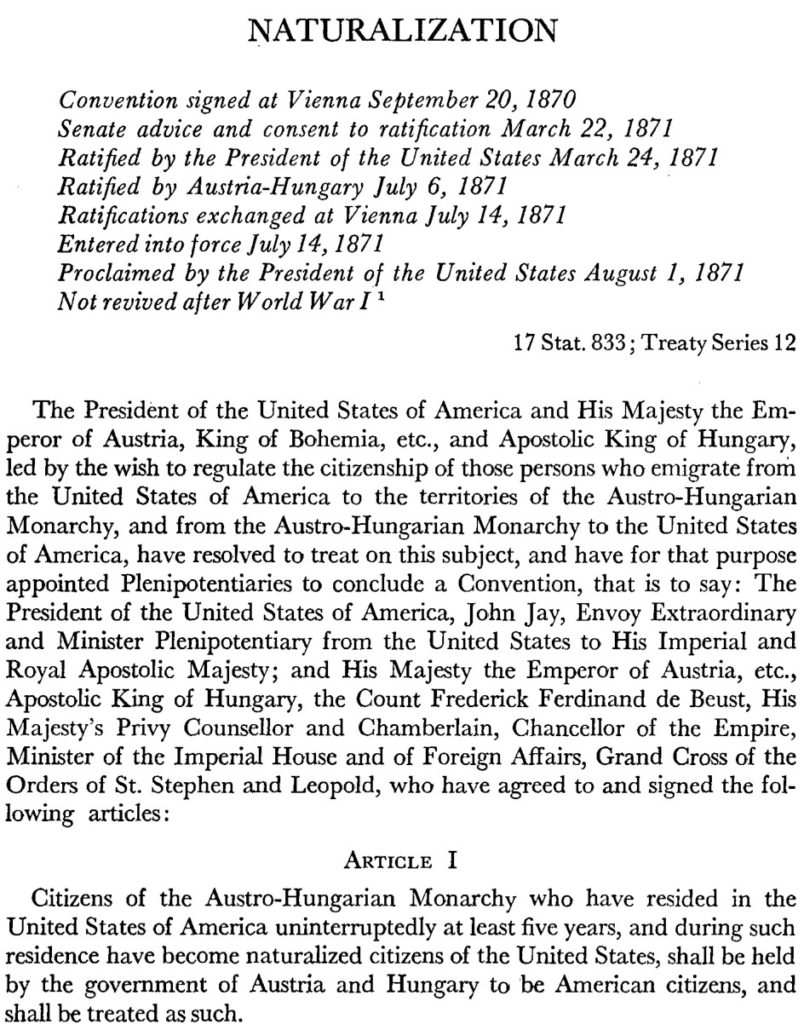
All those who naturalized in the United States after 1871 (and until the end of Austria-Hungary) would lose their Hungarian citizenship pursuant to an international treaty.
68 Responses
Hi Samuel,
Thank you for this article. Very helpful.
My grandfather was born in Chanava (modern day Slovakia) in 1915 and remained there until 1929.
I have his birth certificate that seems to be issued by the Czechoslovakia Republic that lists the town he was born. I also have also an attendance record / report card from the Czechoslovakia Republic that says he went to school there from 1922 to 1929, along with his grades.
I believe he immigrated to Canada in 1929 and I’m not sure when he became a Canadian citizen.
His father, my great grandfather, remained in Chanava his whole life. I have his name and a marriage certificate between him and my great grandmother from 1902 but no other documents of his currently.
Being that my grandfather was born in modern day Slovakia and remained there until 1929, would I qualify for citizenship through descent through him? Also would the documents I have for my grandfather be enough?
Thanks very much for your help!
My grandmother was born in Czechoslovakia (modern day Slovakia) in 1923, but the family left in 1927, so too early for the 1930 census.
Would a birth certificate from this year list right of residence/citizenship? Or due to the date, after the passage of the law, be considered a Czechoslovakian citizen at birth? Or would I need to track down further qualifying information?
I’ve ordered this document but am still waiting for it to arrive but was wondering if there was anything I could start tracking down now (I’ve located but not ordered US naturalization papers from the 40s, for instance.)
Hello, I am curious if the minor age “stopping the clock” might mean an easier CBD path for me. My GGPs were both born in 1897 in Kingdom of Hungary (now eastern Slovakia) and they emigrated to the US in Jan 1921 while expecting my grandfather. My grandfather was born only 4 months after they landed in USA. So I understand that Slovak citizenship immediately passed from my GGF to my grandfather on his birth in 1921, right? Then my grandfather was age 25 when my father was born (1946) and at that time was my grandfather’s “clock stopped” and he passed Slovak citizenship to my father? Or does the “clock stop” only apply to the first generation to leave? Neither one of my GGPs ever formally naturalized in US and I do have proof for this. Both my grandfather and father served in the US military during wartimes. Thanks in advance! ~ AJ
I suppose a step-great-grandparent would not be qualifying, correct?
All of my great-grandparents were born in present-day Slovakia (Kamienka, Stara Lubovna District, Presov Region, northern Slovakia. ); however, I believe only my maternal great-grandfather’s second wife emigrated late enough (approximately 1925) to qualify.
Can you expound on the „Being a minor“ caveat?
My great-grandfather was born on 17 Feb 1886 and my great-grandmother was born on 25 Dec 1892, so he was not age 24 until 1910, and she was not age 24 until 1916. They were married in the US in 1908, so they definitely emigrated pre-1910.
Thanks much!
Meu pai nasceu em Borsky Svat Júr, Bratislava/Tchecoslováquia em 1933, onde viveu com a família até 1950 e aí foi para Wells/Áustria e em 1953 veio para o Brasil onde formou família. Não se naturalizou brasileiro. Tenho a certidão de nascimento dele onde comprova o local de nascimento. Gostaria de saber por favor, se como filha posso me candidatar a cidadania por descendência. Grata
Could you discuss the loss of citizenship due to absence for an otherwise qualifying wife or child based on emigration years? Great grandfather emigrated from SK to Canada in 1907. Great grandmother and children (including my grandmother) did not emigrate until 1911 and joined him in Canada that year. I understand great grandfather would have lost his citizenship in 1917 (they would all have been living together at that time). Would my great grandmother and grandmother have also lost their citizenship in 1917 or would they remain qualifying ancestors due to their emigration year of 1911. What about the fact that my grandmother was a minor (born in 1904)?
My great grandfather emigrated from Krajne in 1909 with his wife and eldest daughter. They left my grandmother, born in Krajne in 1908, behind with relatives in Krajne. My grandmother was brought to the US by a family friend in 1921 at age 12 and joined her family. Her father then naturalized in the US in 1929, when my grandmother was 21. She never naturalized. She married my grandfather, a US citizen, In 1931. Would I qualify for either Czech, Slovakian or Hungarian citzenship? Thank you!
Hi Samuel! is it possible to read the source for this? I cannot find it myself.
„Constitutional Act no. 236/1920 Coll., on State Citizenship and the Right of Residence“
Hi Candela,
You may find it here.
Samuel – CzechoSlovak Passport
My ancestors lived in Astro-Hungary in the 1800’s Bohemia, Austria. They immigrated to the US in the latter part of the 1980’s. One in 1865, 1872, 1876, 1877, 1879. Most were squarely within the Czech territory- identifying ethnically as Czech. They brought their language, food, dance, and culture to the US. I have tried to find any way to gain dual citizenship but Czechia doesn’t recognize them. Neither does Austria. Hungary might but I have to learn Hungarian. Could I be eligible for Slovak citizenship? I know that there Czech government didn’t recognize Slovaks…
I found a 1940 Census form that lists my great-grandfather as „AL“ (an alien) and listin Czechoslovakia as his birthplace. I also have other documents listed Gajar (Gajary) as his town of birth (within present day Slovakia). I am assuming that those documents alone are sufficient for proving his Czechslovak citizenship, but I am not sure if it is possible to get an apostilles for Census and Draft records.
Hi Thomas,
I’m afraid that the documents you mention likely wouldn’t suffice in and of themselves, though they may help you in locating documents in Slovakia. The „alien“ designation in the US Census was generally used for any person, who was neither a natural-born, nor a naturalized citizen, so this would’ve included stateless persons.
Samuel – CzechoSlovak Passport
My grandfather was born in Ohio to Slovak parents. He returned to Slovakia when he was 3, and then came back to the US in 1927 with an aunt and uncle. His parents remained in Slovakia. His death certificate lists his parents as Slovak. I believe this is sufficient for the SLA. But I’m wondering about the CBD. What documentation do I need on behalf of my grandfather/great-grandfather (or my grandmother above) to pursue CBD? Thank you so much!
My grandmother was born in current day Slovakia in 1913 and immigrated to the US in 1928. I have her Slovak birth certificate and the Passenger List which lists her as Slovak. Two questions: (1) Her Slovak name is Justina, but her American name is Christine. Is this a problem? (2) She married in 1933. Do we need to prove that her husband was a Slovak citizen to show that she didn’t lose citizenship? (He was also Slovak.)
My grandfather was born 4.13.1876 in Turzovka, Slovakia and has a certification of arrival in 12.9.11. He petition for naturalization in 1921 listing Czechoslovakia as birthplace. He naturalized 1.4.1924. My grandmother was born in 4.16.1888 in Turzovka, Slovakia. She came over in 6.5.1920 from Tch.Slovakia. I am interested in getting citizenship by descent? What are you thoughts on the immigration dates.
Hi Katya,
Based solely on the dates in your comment, it would appear to me that you likely qualify, especially thanks to your grandmother. If you’re likely, the archives in Slovakia may even hold her passport application.
Samuel – CzechoSlovak Passport
Hello. My great-grandfather was born in Feb. 1891 in Slovakia. Emigrated to the US in June 1910 and naturalized in 1925. Have the naturalization paperwork.
Am I understanding correctly that if these dates fall within the legal interpretation, I still need to find documents proving right of residency through his parents (my great-great grandparents) showing they were living in Czechoslovakia at the time?
My situation is very similar to the situation of this person’s grandfather. That is my PGF immigrated in 1912 at age 18 and naturalized in 1921. Both of his parents died before the 1930 census, in 1893 and 1915. His stepfather (also his uncle) and all of his half siblings and many of the extended relatives still live in his village of birth, Turany.
On His naturalization certificate, he specifically renounces allegiance primarily to „Czechoslovakia“ but also too Hungart. On both 1930 and 1940 census, he claims Czechoslovakia as his birthplace.
Because of his dates, I am questioning my possibility of citizenship by descent. This period between 1912 and 1921 is the obvious concern, and I’m wondering what you think our chances are for citizenship by descent.
Notably, my grandparents settled in a Slovak community in Connecticut and maintain their language and culture until their deaths many years later.